
Chasing Giant Trevally at the Edge of the Map: Ultimate?
Christmas Island GT fishing is about as pure as saltwater fly and lure fishing gets. You are standing on the bow, the sky just starting to glow, feeling the boat rock under your feet while you strip line off the deck. The outboard hums, the reef comes into view, and then the bluewater edge starts to show its teeth. Dark shapes move over the coral, bait showers on the surface, and your guide points, calm but firm: there.
This is what draws serious anglers to the middle of the Pacific. Giant trevally are the bully of the reef, and here they are close, angry, and often very willing. Christmas Island offers a rare mix of sight-based shots, fast action, and true remoteness without giving up comfort or reliable logistics. In this article, we walk through what makes this atoll special for GTs, how a day on the water flows, what gear you actually need, and the practical pieces that help turn a dream trip into real bent rods.
Throughout your trip, we recommend pairing this information with visual planning. Picture yourself:
- Reviewing high-resolution images of GTs pinned in the surf beside the boat
- Watching drone footage of the atoll’s reef edge and lagoon flats
- Studying close-up shots of our boats, casting decks, and lodge life
We always encourage anglers to explore our image gallery and videos before they book, so they can see exactly how the flats, reef edges, and lodge operate in real conditions.
Why Is Christmas Island a GT Hunter’s Dream Destination?
Kiritimati sits in the central Pacific, ringed by outer reefs with deep water just beyond the drop. Inside lies a huge lagoon cut by channels and passes that funnel water in and out with every tide. Where that reef edge meets the open ocean, life piles up. Baitfish, small trevally, and other prey hold tight to structure. Giant trevally slide in from the blue, using the reef as an ambush line.
The bluewater edge is where it all comes together. You might be:
- Casting big flies or poppers tight to reef ledges
- Working stickbaits along current seams and color changes
- Watching for birds, nervous water, and bait balls getting hammered
Conditions stay fairly steady through the year. Trade winds, warm water, and clear light all help create consistent GT chances. Many anglers like trips built around strong tide swings and active moon phases, especially in late winter and spring when days are bright and the reef can feel very energetic.
What makes this place stand out is the mix of remote and fishable. You are far from crowds, but you still have scheduled flights, a working lodge, and local teams that know how to move people and gear in and out. That means more time chasing big trevally, less time worrying about basic logistics.
One of our family members often says, “Christmas Island sits just far enough off the map that only the committed make it here, but close enough that we can run a serious, reliable fishing operation week after week.”
What Makes Ikari House the GT Base You Can Trust?
On a trip like this, where you stay matters almost as much as where you cast. Being right on the island’s main channel is a big advantage. From our beach, we can be running to a reef pass or the bluewater edge in a short time. That means:
- More actual fishing hours each day
- Better flexibility to match tides and light
- Easy switches between lagoon and ocean sides
If the wind shifts or the swell rises, we are not locked into one area. We can slip through the channel and choose the safer or more productive side. That kind of access matters when you are trying to line up a handful of prime GT windows across a week.
How Do Our Boats and Guides Set US Apart?
Our boat fleet is built specifically for this water, with speed and safety in mind. Hulls are set up for quick runs and stable casting, with wide, clean decks, proper motors, radios, and safety gear on board. When you look at photos of our boats on the edge, bows pointed into the surf line, anglers braced and casting, you’ll see how we configure them for real GT work, not just scenic cruises.
Back at the lodge, reliable power, water, and communication keep the whole operation steady in a far-off atoll. Backup generators, well-maintained desalination, and satellite-based communication mean that in a place this remote, basic infrastructure is something you never have to think about.
Guiding is personal for us. This is a family-run lodge, and our lead guides grew up on these channels. As our family likes to say, “Our guides grew up reading these tides. They know where the big trevally move when the current changes, and they will put you in the right spot at the right moment.”
Another senior guide puts it simply: “When we leave the beach, you fish our home water. We know every pass, every coral head, and when a big black shape shows up, we already know where it’s going.”
You get the feel of home-cooked meals and small-group attention, backed by years of serious GT and flats experience. Around the dinner table, you will often see guides and guests reviewing the day’s photos on phones or cameras, GTs in the surf, bonefish on the flats, boats silhouetted against the reef at sunset.
How Does a Typical GT Day at Ikari House Unfold?
Days start early. You wake to the sound of the channel, grab breakfast, and run through a quick tackle check: heavy rods, fresh leaders, clean drags. The first light outside the lodge shows boats lined up on the beach, guides loading coolers and fuel. From the sand in front of the lodge, it is a short walk to the boats, and you push off into the channel as the first light builds.
On the run out, your guides read the birds, swell, and current. The first drift might be a reef pass, working flies or lures across a ledge where the outgoing tide is flushing bait. You are casting into foamy whitewater, stripping hard, ready for that violent stop when a GT eats.
As the day goes on, you might change scenes:
- Hammering GT structure on the outer reef
- Sliding into inside channels to look for trevally and other species
- Jumping over to the flats for bonefish or triggers when the tide is right
The ability to swap quickly between bluewater edge and lagoon targets keeps things fresh and gives you more quality shots. When a big GT eats, there is no warm-up. The first run is brutal. You lean into the fish, trust your knots and drag, and your guide coaches rod angles to steer it away from the coral.
We care a lot about how these fish are handled. Quick fights, firm tackle, and fast, careful releases are the goal. Barbless hooks can help, and we focus on supporting the fish in the water and limiting time out of it for photos. Many of our favorite images show a guest knee-deep beside the boat, cradling a GT in clear water, with the reef edge in the background, fish upright, gills pumping, seconds from release.
Back at the lodge in the afternoon or evening, the rhythm slows. Cold drinks on the beach, photos passed around, gear rinsed and checked for the next round. Dinner is shared with guides and other guests, and the talk naturally turns to the next tide, the next reef, the next big dark shape.
One of the family sums it up well: “We fish hard, we eat well, and we sleep close to the water. That is the rhythm of a proper GT week.”
What Tackle and Techniques Work Best on Christmas Island GTs?
Big GTs will find any weak link in your system. Heavier outfits, clean rigging, and simple, strong setups are the way to go, especially for experienced fly anglers and conventional specialists who want to fish aggressively around heavy structure.
What Fly Setups Do We Recommend for Gts?
For fly anglers, we usually suggest:
- 11 or 12 weight rods with fast actions, capable of turning over big, air-resistant flies in the wind
- Quality saltwater reels with strong, smooth drags and high backing capacity
- Heavy leaders in the 80 to 100 pound range, with straightforward, tested knots
- Flies like brush flies, big baitfish, and poppers that push water and are visible in broken water
Advanced fly anglers often appreciate details like:
- Tropical floating or intermediate GT-specific lines with strong cores
- Short, stout leaders that let you punch casts into the wind
- Practice casting heavy flies to 60, 80 feet quickly, with minimal false casts
What Conventional Setups Excel for Gts?
Conventional anglers often favor:
- Heavy spinning or jigging outfits with plenty of pulling power
- Strong PE-rated braid
- Leaders from 80 to 130 pounds
- Large surface poppers, stickbaits, and jigs that match local bait
Good boat etiquette and technique might be the difference between landing a trophy GT or losing everything in the reef. Keep your line clear on the deck, listen to your guide and boatman, and be ready to adjust your stance as the boat moves. On the eat, you want to commit: strip hard and keep stripping with the fly rod, or hit the fish and keep steady pressure with spinning gear. Heavy drag from the start, with the rod low and to the side, helps turn the fish.
As one of our senior guides likes to remind guests, “When a big GT eats, you have three seconds to decide if you own the fish or the coral does. We will coach you through that moment so your tackle and technique line up.”
How Do Core GT Setups Compare?
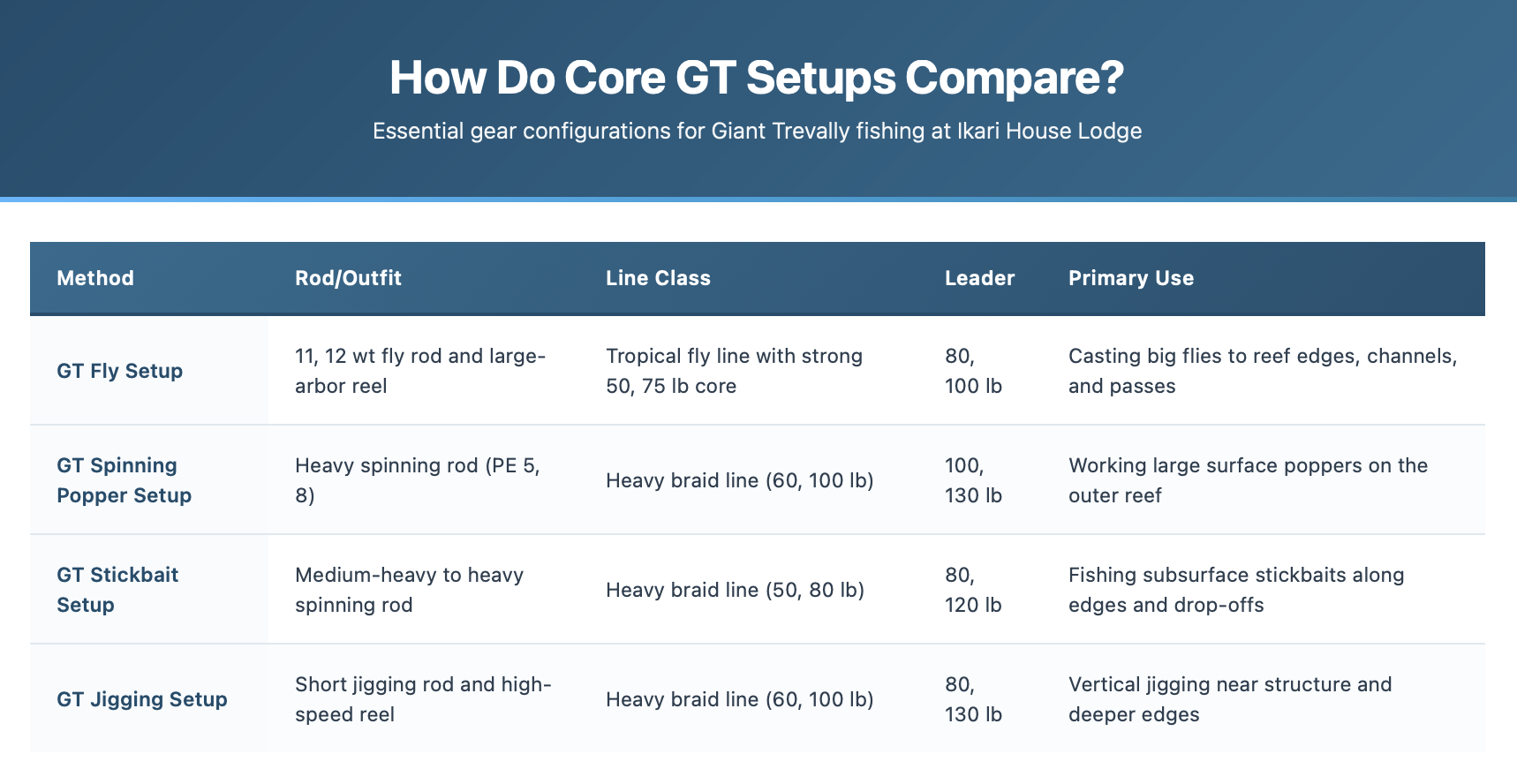
If you review our tackle photos and boat-deck images, you’ll see these systems rigged and ready, with leaders pre-tied and spare setups waiting in the rocket launchers for quick changes.
When Should You Plan Your Trip and What Is Included?
Because the climate here is tropical and steady, GTs are on the menu all year. That said, different parts of the year have their own feel, with changes in sea state, light, and trade winds. Spring periods, including March, often bring good light and very active reef edges, which many anglers appreciate for sighting fish and reading structure.
How Do the Seasons Compare?
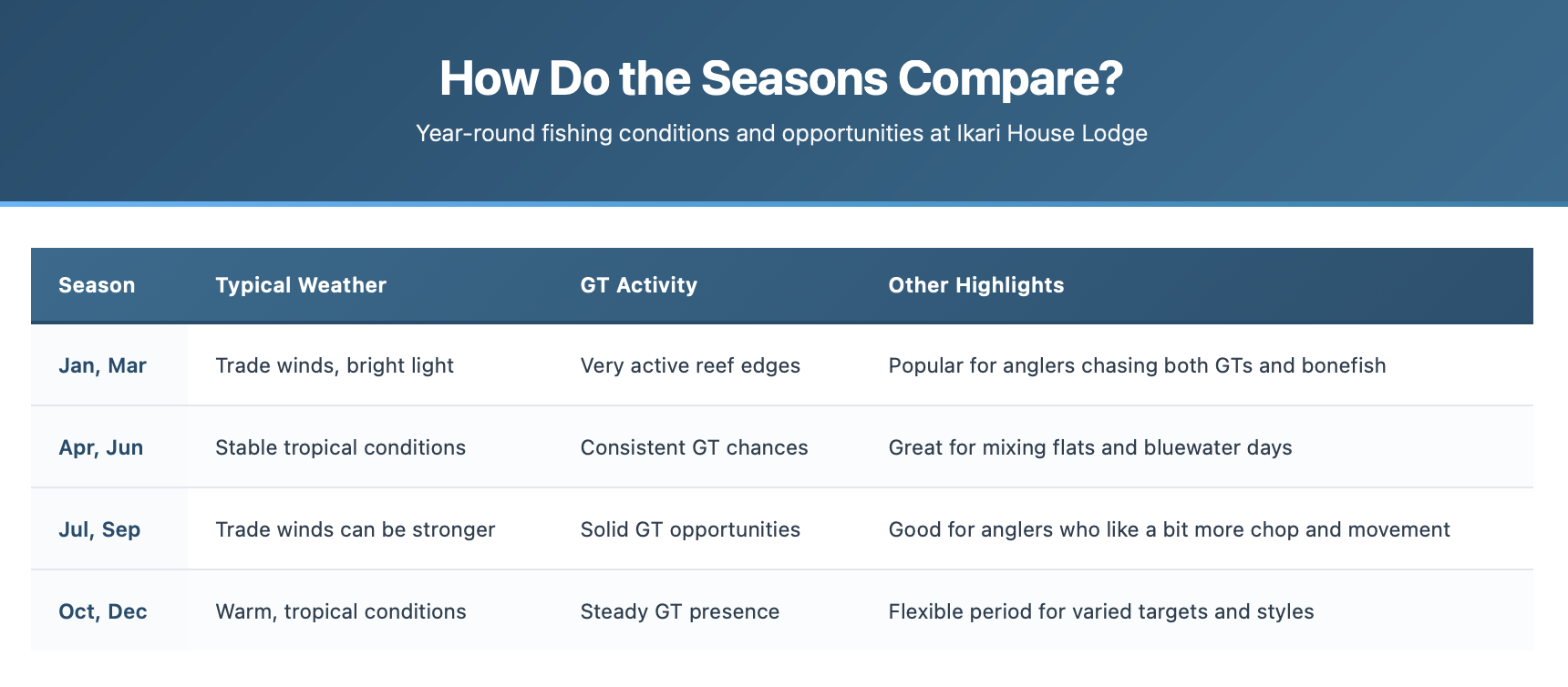
What Is Typically Included in a GT-Focused Stay?
When you book a GT-focused stay with us, you can generally expect:
Included:
- Lodging at the lodge
- Meals each day
- Guided fishing days
- Boat use and fuel for scheduled fishing
- Basic in-country transfers between airport and lodge
Not Included:
- International flights to and from the island
- Certain beverages, especially alcohol
- Gratuities for guides and staff
- Tackle rental or purchases
- Travel insurance and personal incidentals
Travel into Christmas Island usually runs on a weekly flight schedule, so trip planning means matching your ideal fishing week with the plane. Booking ahead helps lock in both seats and tides. Our team is used to helping guests line up flight windows, overnight stops, and arrival times with the best GT opportunities.
What Practical Faqs Help You Plan a GT Expedition?
A focused Christmas Island GT fishing trip brings a few common questions. Below are key points many serious anglers ask about, structured so you can plan and cross-check logistics easily.
Travel and Booking Questions
- How Far Ahead Should I Book?
For peak GT periods, many anglers plan 9, 12 months in advance to match flights with tides and moon phases.
- How Do I Book Flights?
Flights to Christmas Island typically operate on a weekly schedule. We recommend:
- Confirming your lodge dates with us first
- Booking international legs to the gateway city
- Securing the weekly Christmas Island flight immediately after lodge confirmation
Our team can provide up-to-date flight details and suggested routes.
- Do I Need Special Permits or Licenses?
Visiting anglers typically fish under local rules, and our team helps handle fishing license details on arrival, so you do not need to manage this alone.
- How Many Fishing Days Make Sense?
A week with several full fishing days is a good base for serious GT hunters. Many experienced guests prefer 6 fishing days, which balances effort, rest, and weather variability.
Packing and Preparation Questions
- What Rods and Backups Should I Bring?
- GT fly anglers: two GT-capable rods (11, 12 wt) plus a lighter bonefish/trigger rod if desired.
- Conventional anglers: at least one heavy popping outfit and one jigging or stickbait setup, plus a backup.
- What Terminal Tackle Is Essential?
- Spare fly lines and/or braids
- Heavy leaders (80, 130 lb), quality hooks, split rings, and swivels
- Pliers, braid scissors, and basic repair tools
- What Clothing and Personal Gear Should I Pack?
- Light, sun-proof clothing: long sleeves, quick-dry pants or shorts
- Sun hat, buffs, and quality polarized sunglasses (ideally a backup pair)
- Boat shoes or flats boots depending on where you plan to wade
- Personal medications, chargers, and a small first-aid kit
- Waterproof or roll-top bags for gear and electronics
- Do I Need to Prepare Physically?
Some anglers do basic fitness work before the trip, since fighting big GTs and standing all day can be demanding. Simple leg and core work, plus practice casting with heavier rods, can make a big difference.
On-the-Water Routine and Lodge Life FAQs
- What Does a Typical Fishing Day Look Like?
- Early breakfast at the lodge
- Walk down to the boats in front of the lodge and depart via the main channel
- Full fishing day with a packed boat lunch, rotating between reef edges, passes, and selected flats or channels
- Late afternoon or evening return to the lodge
- Gear rinse, cold drinks, dinner, and planning for the next day
- How Are Guides and Boat Pairings Organized?
Guide assignments and boat pairings are usually set to match experience levels and trip goals. We aim to pair advanced fly anglers with guides who specialize in GT and technical flats sight-fishing.
- Can You Accommodate Dietary Needs?
Yes. Dietary needs can be shared ahead of time so we can plan meals. Our kitchen team prepares home-style meals, and we work with you on allergies and preferences.
- Are Rest Days an Option?
Rest days are always an option if you want to recharge, review photos, or walk the beach instead of fish. Some guests like to schedule one rest or half-day midweek.
Conservation and Ethics
Conservation and ethics are part of how we fish. GTs and other species are treated with care, with quick, clean releases and handling that protects the fish and the reef. We pay attention to local practices, avoid sensitive areas when needed, and encourage all guests to fish in a way that keeps this atoll feeling wild for the next person who steps onto the bow.
As one guide puts it in many of our release photos, “Hold them low, keep them wet, and let them kick hard out of your hands. That is how we make sure there is a next time.”
From the first image you see of our boats on the reef edge to the last photo you take of a released GT in knee-deep water, our goal is the same: a world-class, remote, expertly guided trip that feels personal, family-run, and unforgettable for serious anglers.
Plan Your Ultimate GT Adventure With Us
If you are ready to chase trophy giant trevally on clear, shallow flats, explore what our dedicated Christmas Island GT fishing experience can offer you. At Ikari House Lodge, we help you match ideal tides, seasons, and trip length to your goals so every day on the water counts. Tell us what kind of fishing you enjoy most, and we will work with you to shape a schedule and logistics that fit your style. To start customizing your trip dates and details, simply contact us.
